
Fujishirozaka, located on the Kumano Kodo Kii-ji route, is recommended for those who wish to enjoy a day trip from Osaka or Wakayama City to walk the Kumano Kodo.
Fujishiro Shrine
Located in Kainan City, Fujishiro Shrine at this course is known as the “First Torii of Kumano (Entrance to Kumano)”.
Fujishiro Shrine was revered as “Fujishiro-oji,” the most prestigious “Gotai Oji (5 major Oji shrines)” at that time.
In “Gongendo-Temple” in the precincts of the shrine, Buddha images of Kumano Sanzan (Kumano Three Grand Shrines) are enshrined as if to symbolize the former syncretism of Shintoism and Buddhism, and their faces can still be seen today.
The 1,000-year-old camphor tree is also a highlight.


Kumano Kodo of bamboo forests and tangerine fields
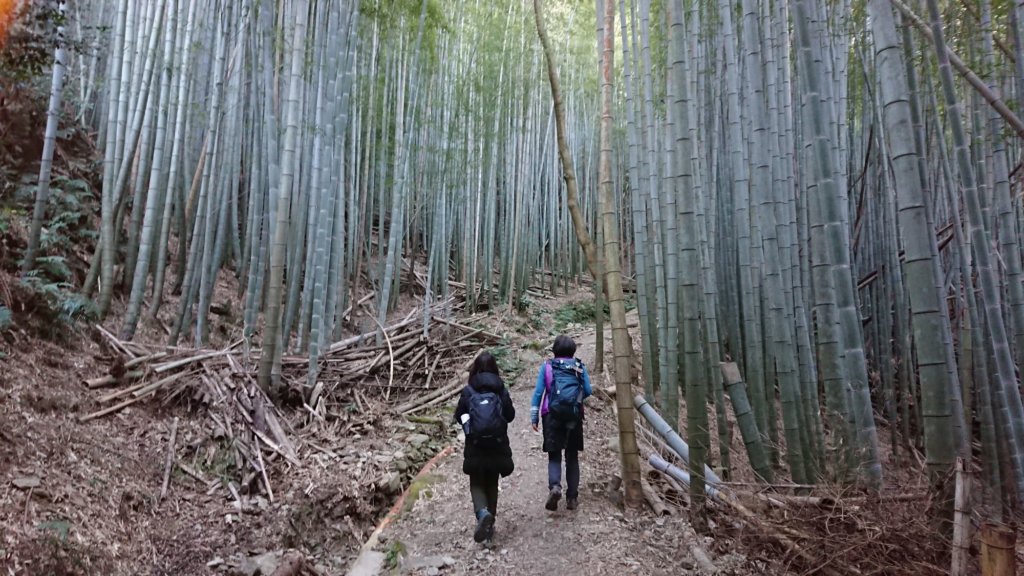
On the way up Fujishirozaka, you will walk through a bamboo grove, which is hard to see on other routes, and on the way down from the pass, you will walk through tangerine fields.

Jizobuji-Temple and Gosho Lawn
This is the site of Jizobuji Temple and Fujishirotoge-oji, which appears as you ascend Fujishirozaka slope.
A huge Jizo statue is enshrined in the main hall.
The Gosho Lawn is named after the abdicated emperors who used to take a rest here.
Gosho refers to the place where the emperor resides or the emperor.
From here, you can see Kainan City, Wakayama City, Awaji Island, and on a fine day, the Akashi Kaikyo Bridge.


Fukushoji Temple
Kukai, the founder of Koyasan (Mt. Koya), visited this temple in 804, crossing the Fujishirozaka slope and practicing esoteric Shingon Buddhism.
The main hall, Gumonjido, and bell tower are designated as National Important Cultural Properties.
There are many attractions within the temple precincts, including the “Urami no Taki Waterfall” named by Yorinobu Tokugawa, the first lord of the Kishu Domain, and a story related to tengu (long-nosed goblins).

